
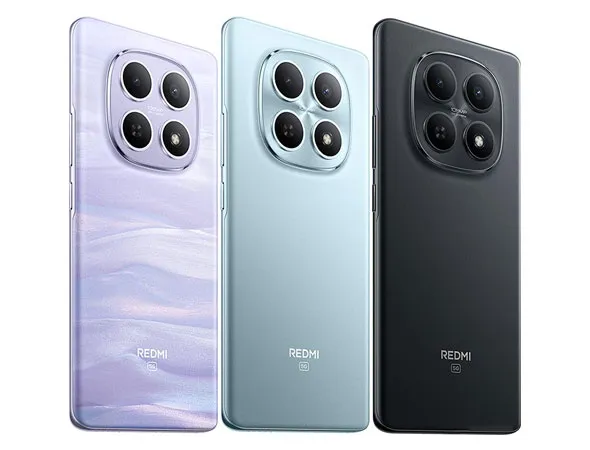
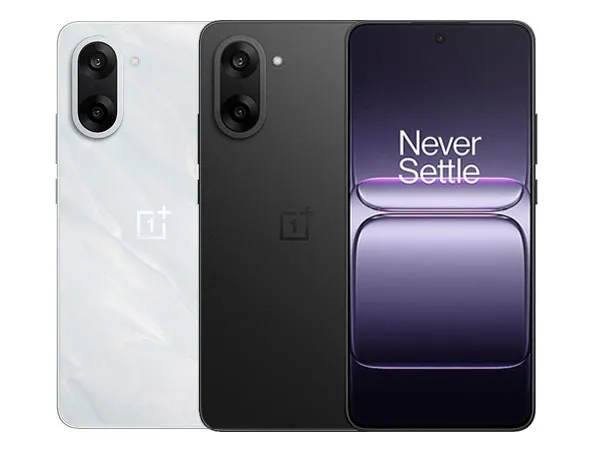
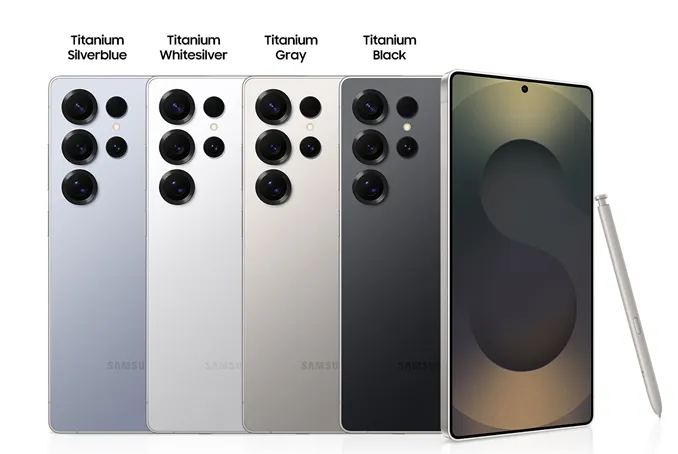
Spec sheets are dense on purpose. A single line like “200 MP, f/1.7, 24mm (wide), 1/1.3”, 0.6μm, multi-directional PDAF, OIS” packs in six separate facts, and the biggest number in it (200 MP) is usually the least useful one for judging whether the camera is actually good. Here’s how to read the sections that matter, using real spec sheets from three phones we track: the Redmi Note 15 5G (RM849), the OnePlus Nord CE 5 (RM1,499), and the Samsung Galaxy S25 Ultra (RM5,299).
Chipset: the name matters less than the process node
“Snapdragon 6 Gen 3”, “Dimensity 8350 Apex”, “Snapdragon 8 Elite” tell you the tier (entry, upper-mid, flagship) but not much else on their own. The number in parentheses after the chipset name, the process node in nanometers, is a more comparable signal: smaller generally means more efficient. The Redmi Note 15 5G’s Snapdragon 6 Gen 3 is built on a 4nm process, same as the OnePlus Nord CE 5’s Dimensity 8350 Apex, while the Galaxy S25 Ultra’s Snapdragon 8 Elite steps down to 3nm, the newer and more efficient node reserved for flagship chips.
RAM and storage: check the type, not just the number
“12GB, 256GB, UFS 4.0” on the Galaxy S25 Ultra tells you three things: RAM amount, storage amount, and storage speed generation. UFS 4.0 is meaningfully faster at reading and writing files than the UFS 2.2 or unspecified storage you’ll see on cheaper phones, which affects how fast apps open and how fast photos save, not just how much fits. Storage capacity alone (the “256GB”) doesn’t tell you that.
Display: resolution isn’t the whole story
The Redmi Note 15 5G lists “1080 x 2392 pixels (~388 ppi density)” with “AMOLED, 68B colors, 120Hz… 3200 nits (peak)”. The pixel count matters less at normal viewing distance than the other three numbers next to it: panel type (AMOLED beats LCD for contrast and black levels), refresh rate in Hz (120Hz feels noticeably smoother scrolling than 60Hz), and peak brightness in nits (higher means more usable outdoors in direct sun). A phone with a lower resolution but higher peak nits can look better in daily use than one with more pixels and a dimmer panel.
Battery: capacity and charging speed are two separate specs
“5520 mAh battery, 45W wired” (Redmi Note 15 5G) and “5000 mAh battery, 45W wired, 25W wireless” (Galaxy S25 Ultra) look similar on capacity, but the OnePlus Nord CE 5’s “5200 mAh, 80W wired” charges close to twice as fast despite a smaller cell. Bigger mAh means longer battery life per charge; higher wattage means less time waiting when it’s empty. They’re not the same claim, and a spec sheet that only shows one of them is telling half the story.
Camera: megapixels are the least useful number in the line
Take the Redmi Note 15 5G’s main camera: “108 MP, f/1.7, 24mm (wide), 1/1.67”, 0.64μm, PDAF, OIS”. Reading it in order: 108MP is resolution, f/1.7 is the aperture (lower f-number lets in more light), 24mm is the full-frame-equivalent focal length (roughly “normal” field of view), 1/1.67” is the physical sensor size (larger sensors gather more light per pixel regardless of megapixel count), and PDAF plus OIS mean the camera has phase-detect autofocus and optical image stabilization. On the Galaxy S25 Ultra’s telephoto lens, “5x optical zoom” is a hardware fact (the lens itself is built for that magnification), which is meaningfully different from digital zoom, which just crops and upscales what the main sensor already captured.

Durability and software: the numbers with real-world consequences
An IP rating like “IP68 dust/water resistant (up to 1.5m for 30 min)” on the Galaxy S25 Ultra is a tested claim, not marketing language, IP66/68/69 ratings come from standardized lab tests. And “up to 7 major Android upgrades” on that same phone versus “up to 4 major Android upgrades” on the Redmi Note 15 5G is a direct answer to how many years of OS updates you can expect, worth checking before you buy if you plan to keep the phone a while.
None of this requires memorizing every spec category. It just means reading past the headline number, whether that’s megapixels, mAh, or GB, to the two or three numbers sitting next to it that actually determine how the phone performs.